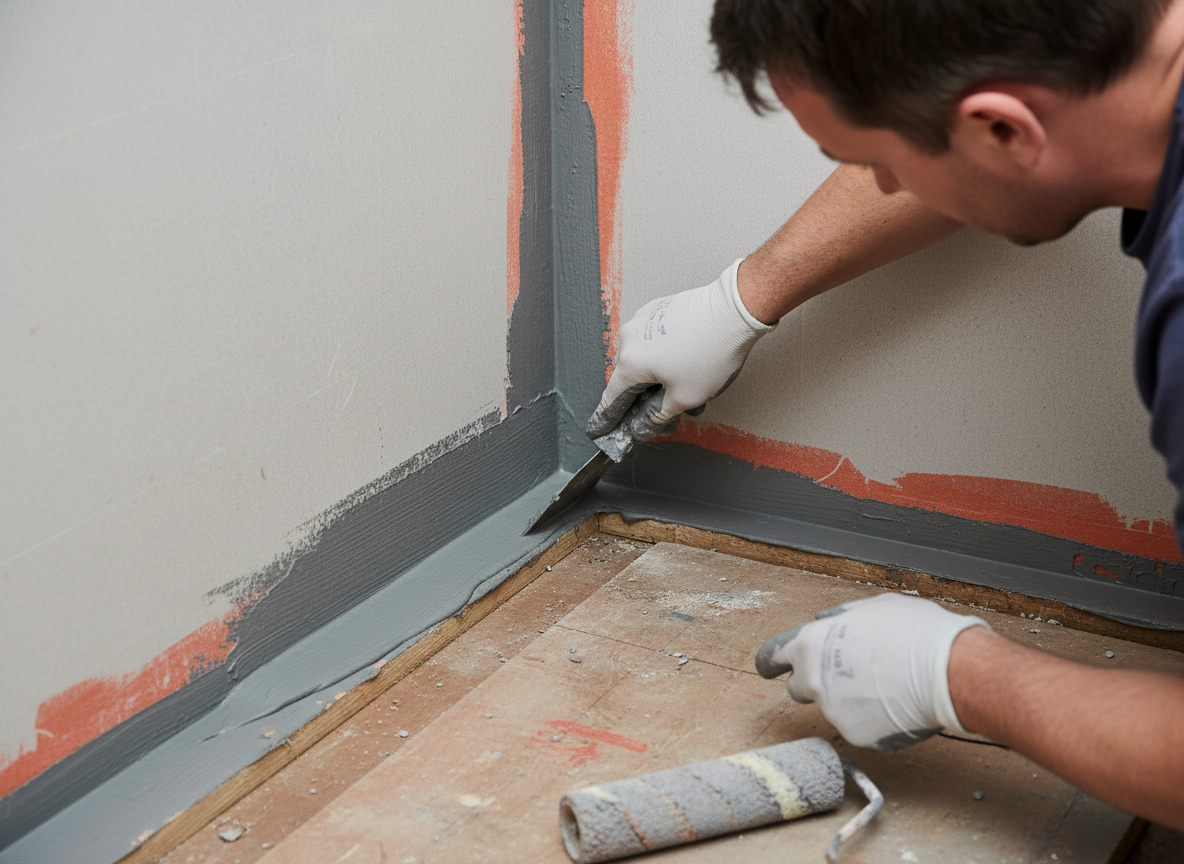
Tanked properly, drained properly, and the pressure worked out before we start.
The two things that ruin bathrooms are both invisible when it is finished. One is waterproofing. The other is water pressure. Everything else — the tiles, the brassware, the vanity unit — is the easy part, and it is the part every showroom wants to talk about.
A wet room is a waterproofing job with a bathroom on top. The tanking membrane is the entire product: it goes over the whole floor, up the walls to at least the shower height, into every corner with a bonded joint, and it is the only thing between your shower and the ceiling below. We tank it ourselves rather than subbing it out, because when a wet room leaks it does not drip — it soaks a joist for a year and then the ceiling comes down.
Falls are the other half of it. A wet room floor has to fall to the drain across the whole showering area, and on a suspended timber floor that means forming the fall in the deck before anything else happens. Retro-fitting a fall into a floor that was laid flat does not work. On a Victorian terrace with a timber first floor, this is usually the part of the job that takes the time.
Pressure decides your shower before you do. A gravity system with a tank in the loft gives you maybe 0.1 bar per metre of head, which is why the shower in a lot of period houses round here is disappointing — and it is why a pump or a switch to an unvented cylinder does more for the experience than any showerhead ever will. We measure the flow and the pressure at survey and tell you what your options actually are, rather than letting you buy a rain head that will dribble.
One local note: because Trafford water is soft, the chrome and the glass stay clean here in a way they simply do not in a hard water area. It is a small thing, but it means you can specify a walk-in screen without committing yourself to a lifetime of scale removal.
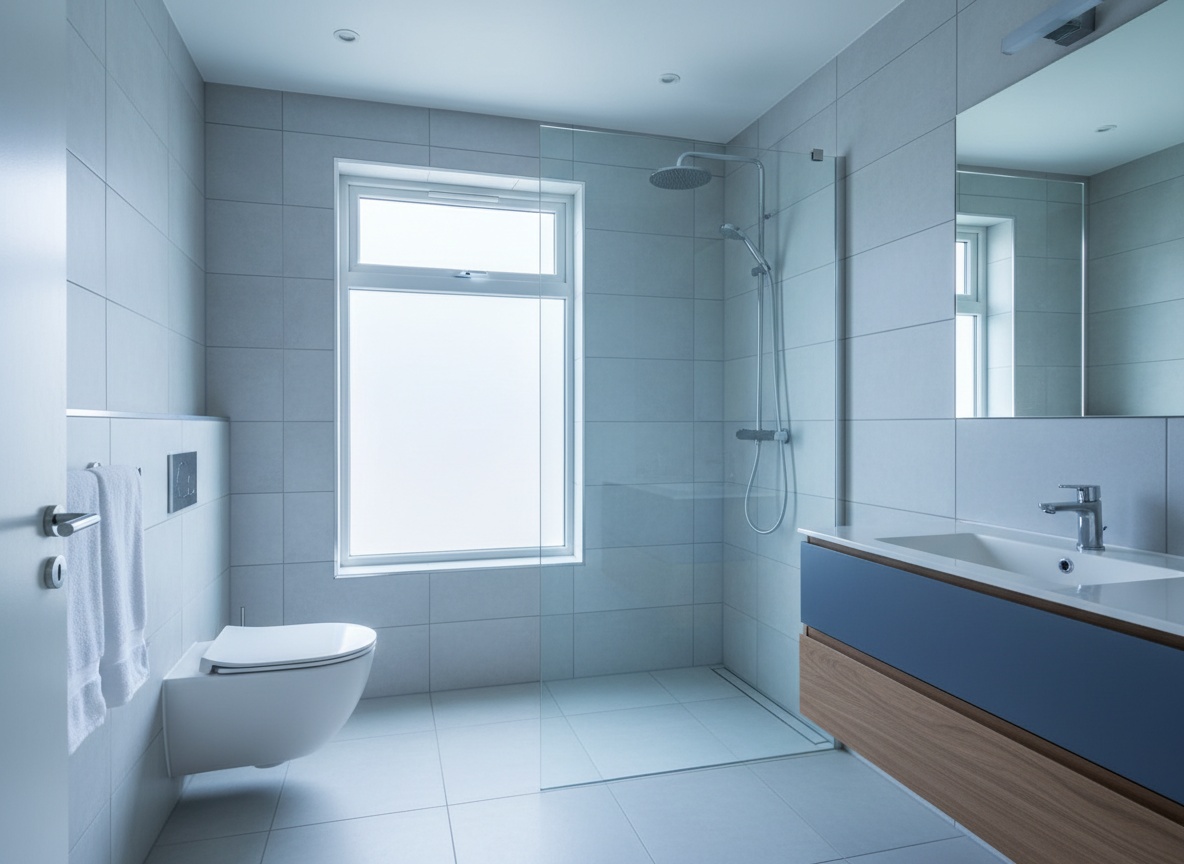
The waterproofing is the product. We do not sub it out, because a wet room leak is a ceiling, not a drip.
Flow rate and pressure at survey. It decides what shower is worth fitting, and it saves people buying the wrong one.
Everything a showroom shows you sits on top of a waterproof membrane, and that membrane is the only thing between your shower and the ceiling below. We tank wet rooms ourselves rather than subbing it out, because a tanking failure does not announce itself — it soaks a joist quietly for a year and then the ceiling comes down.
In short:
Yes, and it is common — but the fall has to be formed in the deck and the tanking has to be continuous. It is more work than a ground floor wet room, and anyone quoting you the same price for both has not thought about it.
Almost always pressure rather than the shower. If you have a cold tank in the loft, your pressure is set by how far the tank is above the shower head, and on a first floor bathroom that is not much. The fix is a pump or a move to an unvented cylinder, not a different showerhead.
Two to three weeks for a full strip-out and refit, longer for a wet room because the tanking needs to go on and be tested before tiling. Anyone promising a week is not tanking it properly.
No. Trafford water is soft — around 30 mg/l. This is one of the few areas of the country where the shower screen genuinely stays clear on its own.
These are the towns where this job is different enough to be worth its own page. Where a town is not listed, the answer is the same as this one.
We find the leak before we open the floor, not after.
Wet UFHThe lowest flow temperature in the house. The best thing you can pair with a heat pump.
Gas heatingGas Safe registered. Sized to your house, not to the van stock.
Free survey, no obligation, and an honest answer — including when the honest answer is that you do not need this yet.