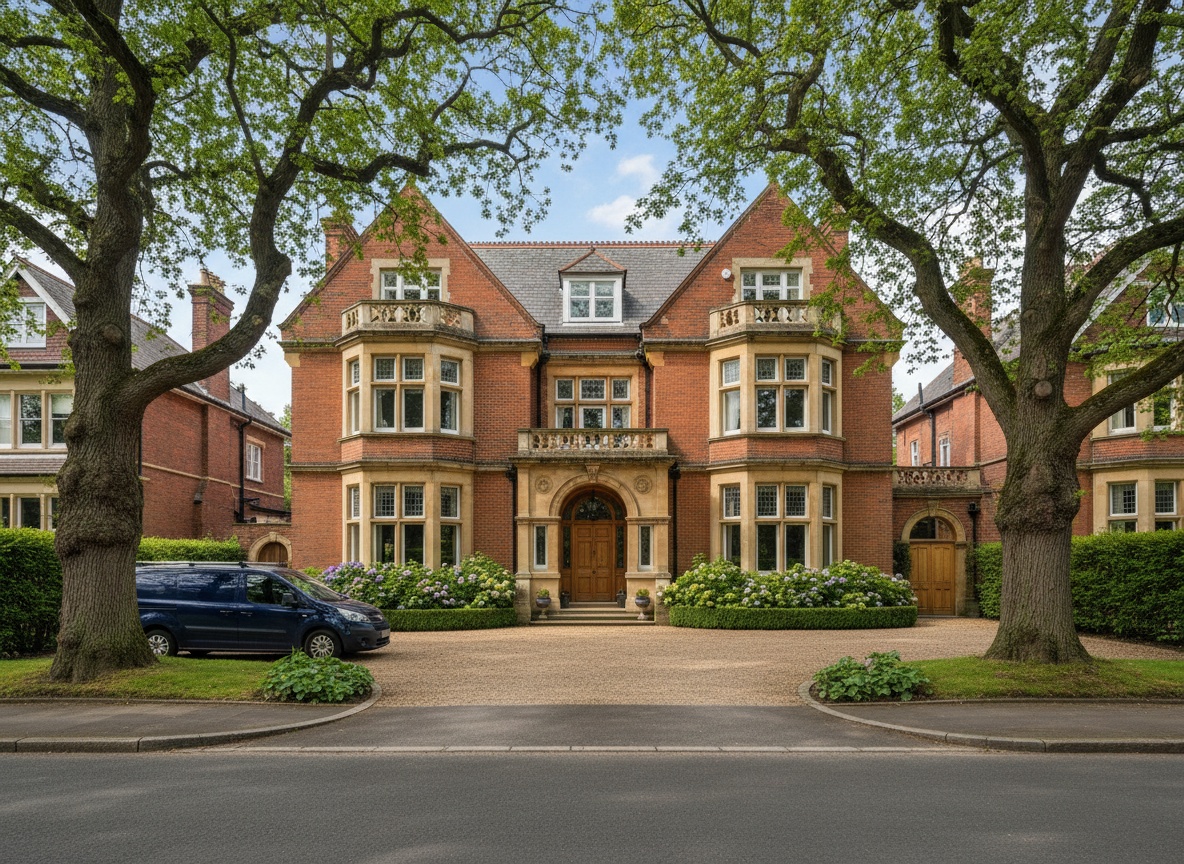
Nearly everything we do in Hale comes back to one number: how many outlets can run at once. These are big houses with a lot of bathrooms, and the heating system that came with them was usually specified for a smaller family than the one living there now.
Hale is dominated by large Edwardian and inter-war detached houses on generous plots — a lot of solid-wall construction in the older stock, deep plans, and the kind of mature garden that makes siting anything easy. Around Hale Station there is a conservation area, and the closer you get to Hale village the tighter the planning gets.
A six-bedroom house with four bathrooms and a utility cannot be run off a combi, and we get called out to a lot of houses where somebody has tried. Two showers and a tap and the temperature collapses. The answer here is almost always a system boiler or a heat pump feeding a properly sized unvented cylinder, with the incoming main checked first — because a 22mm supply that delivers 15 litres a minute will not fill a big cylinder or run three outlets no matter what you hang on the wall.
Siting a heat pump in Hale is the easy part: the plots are big, so the MCS 020 noise calculation passes without anyone having to think hard about it, and a detached house can have two units under permitted development if the heat loss genuinely needs a cascade. The hard part is the fabric. A solid-wall Edwardian house with single-glazed sashes has a heat loss that will demand either a lot of radiator upsizing or some fabric work first. We would rather tell you that at survey than after. The Hale Station conservation area also means the unit cannot front the highway — normally not a problem given the plot depth, but it needs checking on the corner plots.
MCS certified. The grant comes off the quote, not out of your pocket.
Hale guideGas Safe registered. Sized to your house, not to the van stock.
Hale guideThe lowest flow temperature in the house. The best thing you can pair with a heat pump.
Hale guideTanked properly, drained properly, and the pressure worked out before we start.
Hale guideWeather compensation does more than an app ever will.
ServiceWe find the leak before we open the floor, not after.
Where a service has no Hale guide, it is because the job here is no different to anywhere else on our patch — so we send you to the main page rather than write a page that only exists to say "Hale" a few times.
Big houses, big cylinders, big heat loss. Siting is easy; fabric is not.
It can, but be prepared for the survey to say the fabric needs attention first. Solid walls and single glazing produce a heat loss that pushes the flow temperature up, and a high flow temperature is what makes a heat pump expensive to run. We would rather show you that number than sell around it.
Because you have a combi trying to serve more outlets than one heat exchanger can. It is not a fault and a bigger combi will not really fix it. Stored hot water from a cylinder will.
Not if the floor is suspended timber — we work in the void and lose nothing. On a solid floor an overlay adds roughly 15 to 20mm plus the finish, which usually means easing doors. In a period house with original joinery that is worth mapping before you commit.
Yes, but the fix is upstream of the bathroom. It is almost always stored hot water and pressure — the system was designed for fewer bathrooms than the house now has. An appropriately sized unvented cylinder on a main that can feed it solves it properly.
Not until the system is balanced, and possibly not then. On an unbalanced system in an old house they make things worse — they close down, the flow has nowhere to go and the boiler short cycles. Balancing costs less and does more. Do that first.
Large period detached, and the simultaneous-demand problem. Hale is a short drive from the yard in Altrincham, not a motorway job.
Every job starts with a survey and a heat loss calculation. If the honest answer is that your boiler has years left, that is what you get.
Tom came out and told us our boiler had another five years in it and to spend the money on the loft instead. We had them back for the heat pump two years later.
Two installers had already told us a heat pump was impossible. Bridgers did the noise calculation on the survey visit and showed us the number. It passed.
Found a leak under our kitchen screed with a camera in twenty minutes, then lifted one small patch. The previous quote was to take the whole floor up.
They explained why a bigger combi could never fix it rather than selling us one. New cylinder, completely different house.
Free, no obligation, and you get an honest answer at the end of it.