Gas Safe registered. Sized to your house, not to the van stock.
Most boilers are replaced at the wrong size. The industry habit is to fit a 30kW combi because it was on the van, in a house that needs 18kW — which means the boiler spends its life cycling on and off, wearing itself out and costing more to run than the smaller one would have. We size to a heat loss calculation.
The first question is not which boiler. It is which type. A combi is genuinely the right answer for a three bedroom semi with one bathroom, and it is genuinely the wrong answer for a five bedroom house with three bathrooms and a family who all shower at eight in the morning. In a house like that a combi will always disappoint, whatever badge is on the front, because it is trying to make hot water on demand for more outlets than any single heat exchanger can serve. That is a system boiler and a properly sized unvented cylinder.
The second question is your incoming main. A combi is only as good as the water going into it, and there is no point hanging a 35kW combi on a wall if the main can only deliver twelve litres a minute. We measure the flow rate at the survey. It takes two minutes and it settles the argument before it starts.
One local point worth knowing, because it saves people money: Trafford water is soft — about 30 mg/l. Limescale is not your enemy here the way it is in the south east. You do not need a scale reducer, you do not need a softener, and if someone has quoted you for one on top of a boiler in Altrincham, ask them why. What we do look at on the older stock is the incoming supply pipe, because soft water and Victorian lead are not a good combination.
Every install gets a system flush, a magnetic filter and an inhibitor dose, and the reason is not upselling. It is that the black sludge that kills heat exchangers is magnetite — iron oxide off the inside of your radiators — and it has nothing to do with water hardness. Soft water areas get sludged systems just the same. The filter is what keeps the new boiler alive.
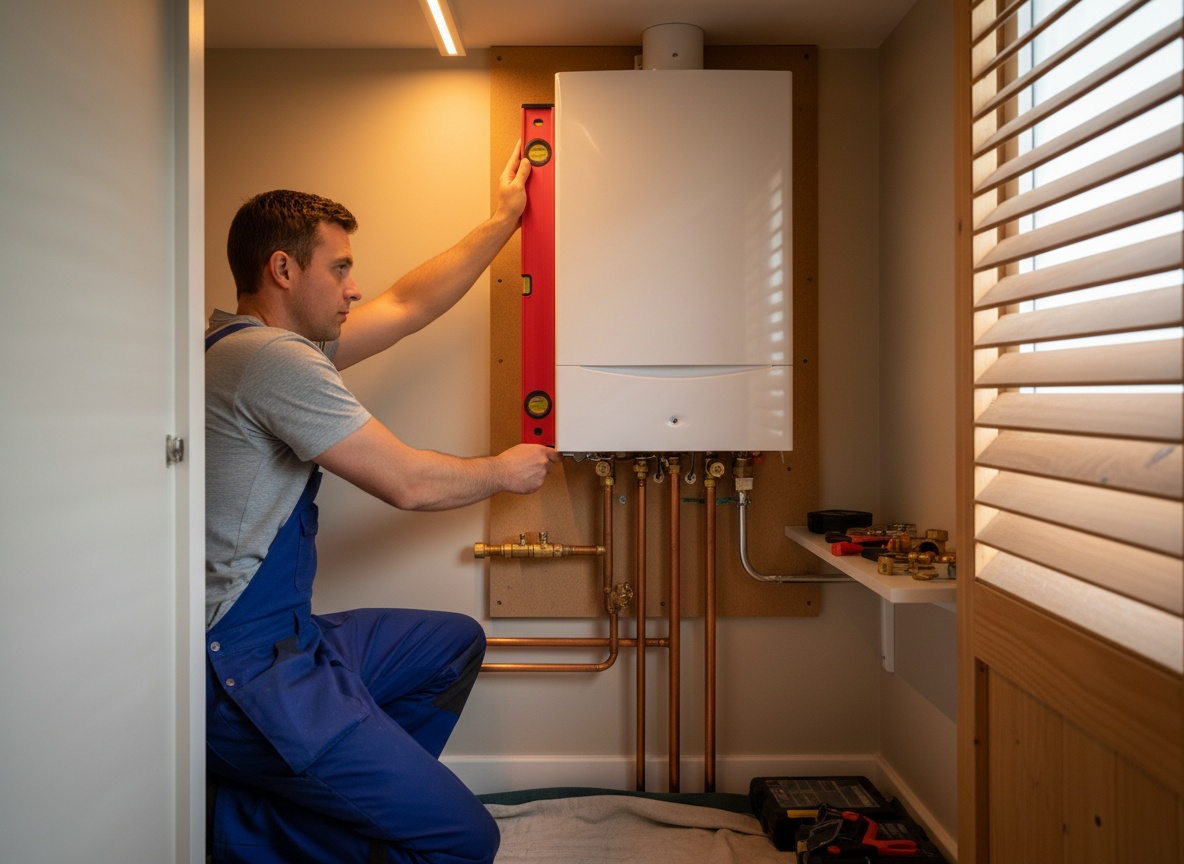
A heat loss survey and a flow rate test before we quote. Not a guess off the bedroom count.
Every engineer on the job is on the register, and the certificate is with you before we leave.
A straight like-for-like combi replacement is usually a day. Moving the boiler to a different wall, or converting from a system with a tank in the loft to a combi, is two to three days because there is pipework and making good involved.
One bathroom, up to three bedrooms — combi, almost always. Two or more bathrooms that get used at the same time — keep a cylinder. The deciding factor is how many hot outlets run simultaneously, not the size of the house on paper.
No. Trafford runs around 30 mg/l, which is soft water. Limescale genuinely is not an issue here. This is one of the more common things people are sold that they do not need.
Often not. If yours is fifteen years old, serviced, and heating the house, we would generally tell you to keep it and put the money towards insulation. Where it changes is if you are planning a heat pump in the next few years, because the radiator work overlaps and doing it once is cheaper than doing it twice.
These are the towns where this job is different enough to be worth its own page. Where a town is not listed, the answer is the same as this one.
MCS certified. The grant comes off the quote, not out of your pocket.
Controls & zoningWeather compensation does more than an app ever will.
Leaks & repairsWe find the leak before we open the floor, not after.
Free survey, no obligation, and an honest answer — including when the honest answer is that you do not need this yet.