Weather compensation does more than an app ever will.
Most smart heating is sold on the app and the app is the least important part. A thermostat you can turn on from the train saves you very little. What saves real money is weather compensation and proper zoning, and neither of them has a marketing budget.
Weather compensation is the one that matters. An outdoor sensor tells the boiler or heat pump how cold it is outside, and the flow temperature moves to suit — 40 degrees on a mild October morning instead of the 70 it would otherwise send out and then cycle off. It means the heat goes in gently and steadily instead of in bursts, the house stays at a flatter temperature, and a condensing boiler actually condenses, which is the entire reason it is called one. Most condensing boilers in this country never condense properly because they are run at a flow temperature that makes it impossible.
Zoning is the other half. A single thermostat in the hall is measuring the coldest, draughtiest, least-used room in the house and using it to decide the temperature of your bedroom. That is how most houses are wired. Splitting into real zones — upstairs and downstairs at a minimum, and room by room where there is underfloor — means each part of the house gets what it needs.
The bit we will talk you out of: smart TRVs on every radiator in a house that has never been balanced. They will fight the boiler, they will close down enough of the system that the flow has nowhere to go, and you will have spent several hundred pounds to make things worse. Balancing the system costs less and does more. If you want smart TRVs after that, fine — but in that order.
On a heat pump, controls are not optional decoration. The whole efficiency case rests on running the lowest flow temperature that will hold the house, which is exactly what weather compensation exists to do. A heat pump on a fixed 55 degree flow with an on-off thermostat is a heat pump running like a bad boiler.
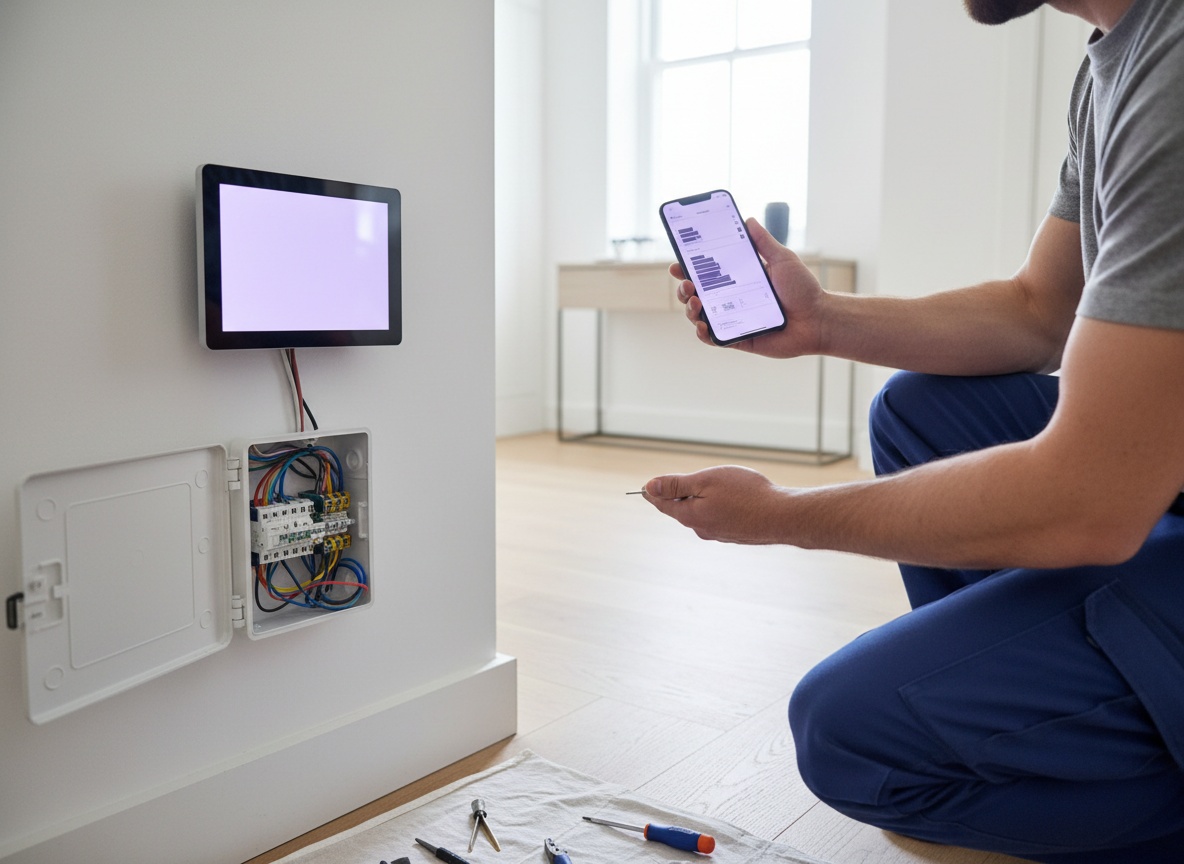
An outdoor sensor and a compensation curve does more for your bill than any app on any phone.
Upstairs, downstairs, and room by room where there is underfloor. Not one stat in the hall deciding for everyone.
A bit, mostly by not heating an empty house. Weather compensation saves considerably more, and it is far less talked about. If you only do one thing, do that one.
A sensor on an outside wall tells your heating how cold it is, and your heating adjusts how hot it makes the water to match. Mild day, cooler water, gentler heat. It stops the boiler blasting and cycling, which is where the waste is.
Almost certainly not, and on an unbalanced system they will make things worse. Get the system balanced first. After that, they are a reasonable convenience — just not a saving.
They are essential with a heat pump. The efficiency case depends on running the lowest flow temperature that keeps the house warm, and weather compensation is the thing that does that automatically.
These are the towns where this job is different enough to be worth its own page. Where a town is not listed, the answer is the same as this one.
MCS certified. The grant comes off the quote, not out of your pocket.
Wet UFHThe lowest flow temperature in the house. The best thing you can pair with a heat pump.
Gas heatingGas Safe registered. Sized to your house, not to the van stock.
Free survey, no obligation, and an honest answer — including when the honest answer is that you do not need this yet.